
As artificial intelligence becomes increasingly woven into our daily lives through self-tracking apps, digital assistants, and personalized recommendations, we need new frameworks to understand this relationship. Human-AI entanglement is a concept rooted in Karen Barad’s agential realism and Fourth Wave HCI research, which offers a profound shift in how we think about human-computer interaction.
Rather than viewing users and AI as separate entities that interact, entanglement theory reveals how we are fundamentally intertwined with the technologies we use, particularly in areas like menstrual cycle tracking apps, self-tracking apps for well-being, and personal informatics. This emerging perspective in interaction design has critical implications for understanding AI overreliance, agency, and the ethical considerations of designing AI-powered applications that shape our lived experiences.
Recently, I read the book “Meeting the Universe Halfway: Quantum Physics and the Entanglement of Matter and Meaning” by Karen Barad. Barad is a theoretical physicist and a feminist who, in the book, goes through quantum physics theories by Niels Bohr and compares them to other theoretical frameworks, such as Einstein’s. She extends Bohr’s views into other fields such as feminism, social issues, and human-machine interaction.
As I do not have any formal background in physics, this was quite a challenging read. I was motivated by learning about Agential Realism, as it is a theoretical framework that has been increasingly applied to human-computer interaction research, in what’s called the Fourth Wave of HCI. Agential Realism in HCI has been used to examine embodied and lived experiences in, for example, menstrual cycle tracking apps, aiming to go beyond examining human-computer interaction into the realm of how we humans (users) are entangled with technology and how lived experiences emerge through and with the integration of technology into our everyday lives.
In Agential Realism, entities such as humans and computers aren’t distinct, separate agencies that “interact”, but we are all in a constellation of intra-action, and the world emerges from these intra-actions. So instead of seeing users and technology as different entities with their own agencies, entanglement is more about how users and technology are entangled and how experiences and happenings emerge from these entanglements and enactments.
I know there are a lot of different terms and words that might not mean much for a first-time reader, as I didn’t understand much of it either the first few times I encountered this theory. However, I’m going to try to explain it in even simpler terms, with the risk of misinterpretation, as I am not an expert in this yet.
What is Entanglement in Human-Computer Interaction?
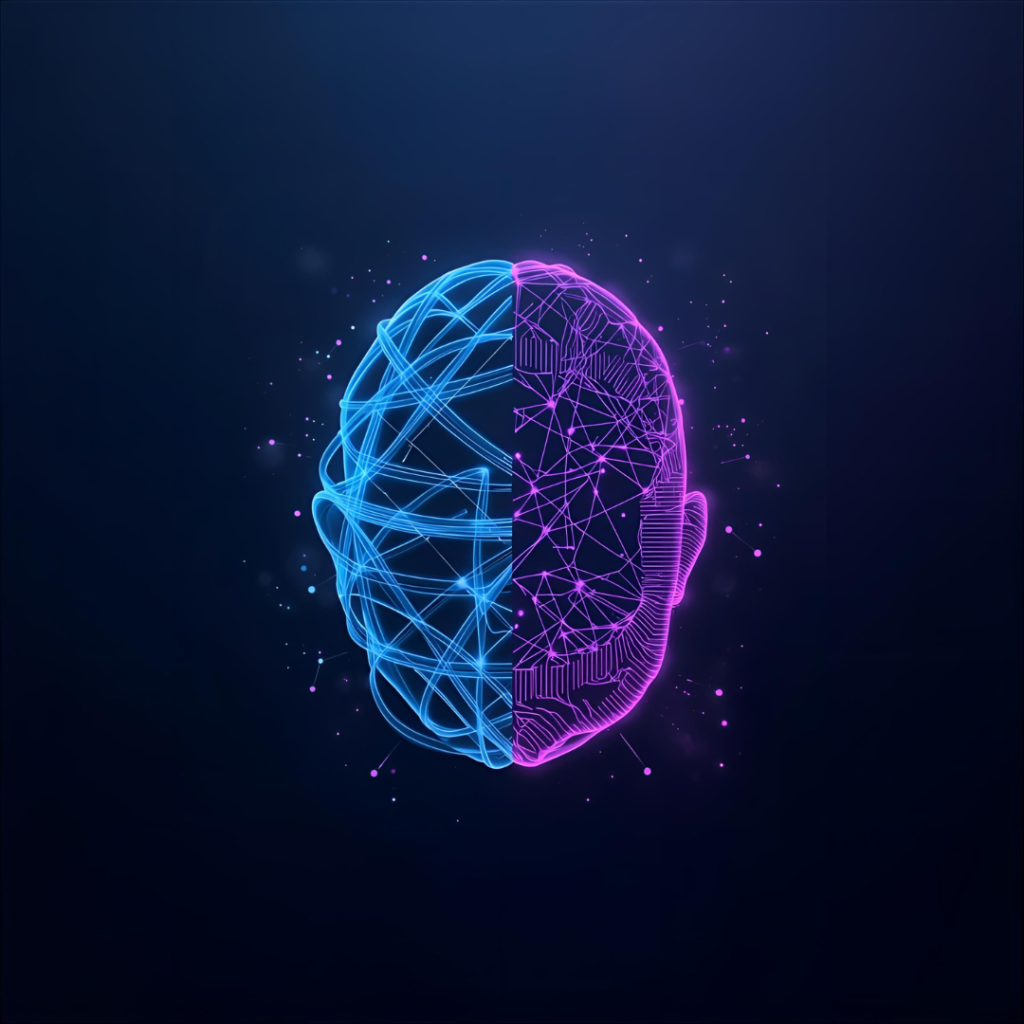
Through the lens of agential realism, humans and computers, including hardware (e.g., laptops and mobile phones) and software (e.g., applications, digital products, websites), are not distinct independent entities interacting with each other with clear and differentiating limits. There is no clean cut where humans “end” and where a computer or technology begins, especially as we are living with these technologies day-to-day.
We humans are entangled with technology.
Entanglement between humans (users) and technology concerns a bigger realm of things. For us humans, living with technology can shape how we see and experience ourselves, others, and the world. For technologies, such as applications and machine learning models (AI), our use, inputs, design, culture, politics, and laws affect how these technologies manifest. For example, the EU’s AI Act plays a role in how ML models are designed and created, which in turn has ripple effects on how ML models affect us humans and how we will be entangled with future ML models.
Human-AI Entanglement
I am particularly interested in the ways humans and AI are entangled, which I refer to as “Human-AI entanglement”. I also believe that human-AI entanglements are best examined through self-tracking apps with AI-based features such as predictions, insights, chatbots, and personalized recommendations.
We humans can build machine learning models, trained on our own data, and make them even more personalized by continuously feeding them with data through long-term self-tracking and logging. The feeds an increasingly entangled relationship where machine learning models are shaped by us as creators, designers, and developers, and where we humans are shaped by AI outputs, such as living with predictions, insights, and recommendations in our daily lives.
Entanglement between humans and AI can be especially examined when humans overtrust and overrely on AI features in self-tracking apps, to the extent that we may even override our own feelings and experiences in favor of making it fit with the ML model’s outputs. And the ML models are not an entirely distinct entity either, because it has been created, shaped, and trained by our data and without values and agendas.
For me, this raises interesting questions on how these entanglements manifest in how humans experience themselves, the world, and the technology they use. What ethical considerations and values might we want to consider when we design and create these technologies, which have far-reaching consequences?
The concept of human-AI entanglement challenges us to move beyond traditional interaction design paradigms and recognize the profound ways we are shaped by, and shape, the AI systems embedded in our everyday lives. As machine learning models learn from our data and we, in turn, adjust our behaviors based on AI predictions and insights, we enter an increasingly entangled relationship with technology.
For designers, developers, and researchers working in human-computer interaction and AI ethics, understanding agential realism and entanglement is essential for creating responsible and ethical AI applications. Whether you’re designing self-tracking apps, developing explainable AI features, or researching human-AI interaction, considering how technology and humanity co-constitute each other opens new pathways for ethical design and meaningful digital experiences.