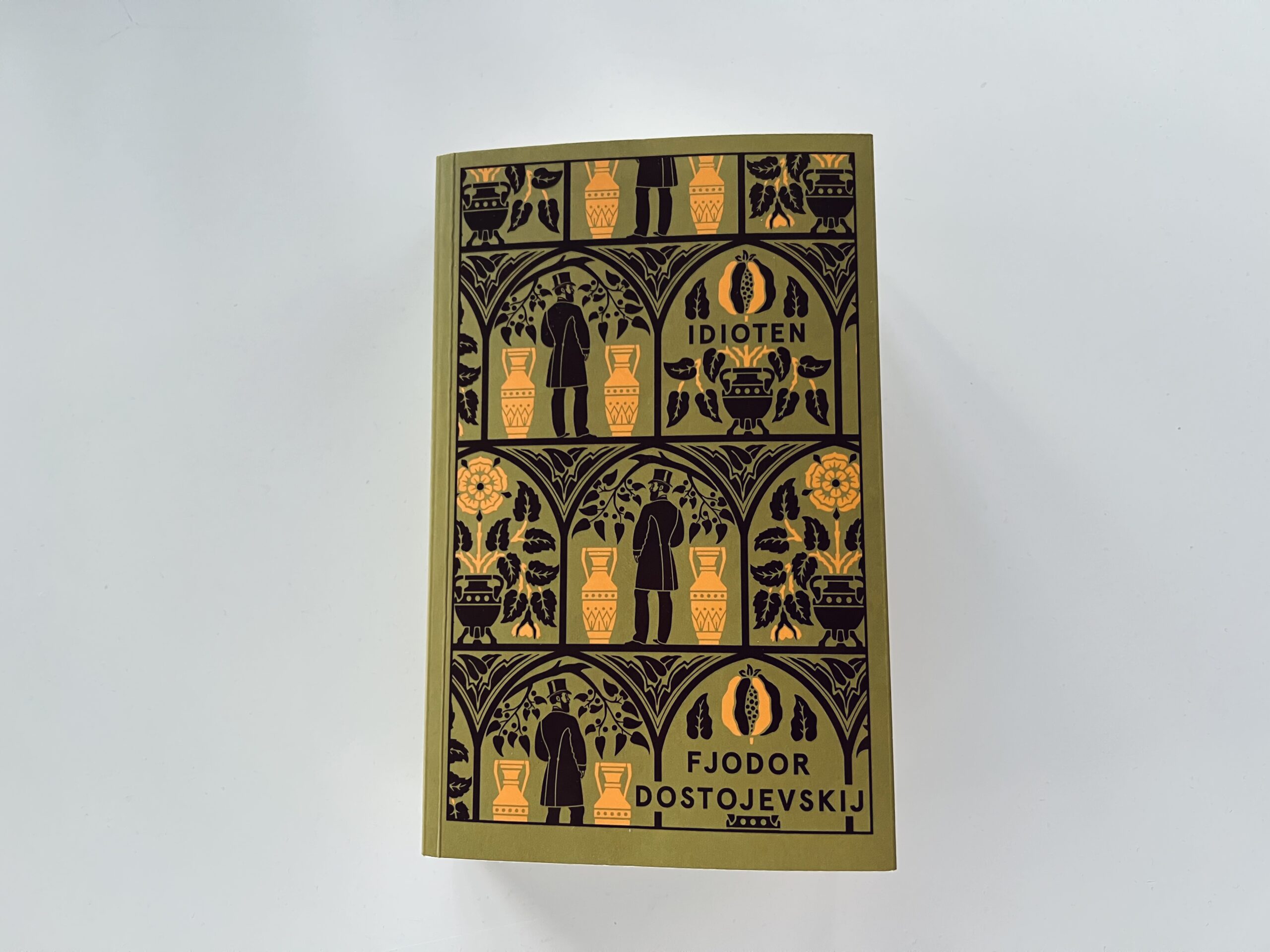
About Dostoevsky
Fyodor Mikhailovich Dostoevsky is considered one of the world’s most famous authors. He was Russian, a descendant of a noble Russian family, but grew up in a relatively poor household. He wrote many literary masterpieces, such as Crime and Punishment (1866), The Brothers Karamazov (1880), Notes from the Underground (1864), and The Idiot (1868-1869).
Similarities between Dostoevsky’s life and The Idiot
When Dostoevsky wrote The Idiot, he had just escaped from creditors in Russia and was living in Switzerland. He was very poor and often had to borrow money. He was even evicted multiple times from his living place. He also suffered from epileptic seizures.
The main character in The Idiot is Prince Myshkin. He, similar to Dostoevsky, is from an old Russian nobility, but he is also very poor and suffers from an epileptic condition. Before the story starts, Prince Myshkin been living in Switzerland for a few years to receive treatment at a clinic.
Already on this character level, we see many similarities between Prince Myshkin and Dostoevsky. I always think it’s interesting to see the parallels between an author’s life and experiences and what they write. A part of their stories is invented in the process of writing, but many aspects, I believe, reveal who the author truly is.
The Storyline and Characters
In The Idiot, Prince Myshkin is a character likened to Jesus. Someone pure of heart, full of goodwill, who is authentic, true, real, and does not fit into all the lurkiness and grimness of our normal society. He is constantly tricked and maneuvered by the complexities and falseness of the individuals in society. He naively takes people at face value. As the storyline progresses, he starts to see through the veil and recognizes people’s dark sides, but this also causes him a lot of anxiety.
His choices are his own, based on his values and beliefs. They are goodhearted and ethically defensible, but sadly, lead to the worst consequences.
Modern-day lessons from The Idiot
Even though this book was written in 1868-1869, the themes and lessons are timeless. Dostoevsky has created an illustrative storyline and characters that we can find even today.
Lesson 1: Your choices reflect your values
The primary point this story illustrated to me is that every person has their own values and moral compasses. Your choices are not your own, but made according to who you are. And who you are is not something you decide.
Prince Myshkin’s choices led to the worst consequences, but I don’t think he could have done any different. I even believe that he knew what was coming, but still could not choose to act differently.
We all have our convictions about what the right thing to do is. Even if others advise us to act differently, and we rationally agree, our personalities, characters, experiences, and values dictate our choices.
For me, I take this as a lesson to accept who I am and what I value. Fighting against my own values and inner compass is hard; it causes anxiety, and it might not even be possible in the end.
Lesson 2: You can’t control outcomes
Since Prince Myshkin’s choices are good-hearted, but still lead to the worst outcomes, I take this as a message that we can’t control what happens. We can only act as we think is best, but we can’t expect the “right” actions to lead to good outcomes. It can, but it’s not certain.
This raises the question whether it’s our values that are important, or the consequences of our actions. To achieve the best outcomes, we might need to make choices that are against our values and morals. Should we? What’s the most important between the two?
Since the destiny of Prince Myskhin and his loved ones turned out so negatively, one could take the story as being against living according to ethical values. Or it just means that we can’t control the outcomes, no matter what we do. Not even the best and most good-hearted of us can be promised a desirable destiny.
And what could the lesson be? Perhaps to stop trying to control the outcomes. We shouldn’t sacrifice ourselves or others to control destiny. Instead, perhaps we should prioritize happiness and peace.
Lesson 3: Some People Are Simply Bad — And That’s Just How It Is
In the story, some people are simply bad, pathetic, and unproductive. They cause drama, spread negativity, and create problems. They almost can’t help it, and some might not even know or think that it’s wrong.
Lesson: Avoid people who are bad apples. Being good and kind only destroys yourself – you should let them be instead. You do not need to harm them, but stay away and don’t get caught.
Lesson 4: Don’t be naive to the Hidden ugliness of people
Prince Myshkin is so good-hearted and naive, and he does not understand hidden social norms or dark social psychology. He takes people at face value and does not realize that not everyone is as they seem outwardly.
Lesson: Peel away the top layers and see the true person underneath. Some people seem and act nice, but are nasty. Others act and behave badly, but are actually nice.
Lesson 5: Love Isn’t Possession — Let Go of Toxic Obsession
Many of the central themes in The Idiot circle around romantic interests. It’s jealousy, possession, and obsession that lead to unhappiness. If only people could learn to let go and prioritize their happiness and well-being instead of wanting to possess their romantic interests, they would be far better off.
Lesson: If your romantic interest is toxic, crazy, scary, violent (or threatening), or can’t let go of someone else, then let that person go.
Lesson 6: Money Is a Tool, Not a Goal
In the book, some characters have an excess of money, others seek it, and some don’t place much value on it. Some characters squander it away to try to gain the affection and love of others, and others are only after a person to possess their money.
Money affects how society perceives you. More money makes you more attractive to others. It’s useful for paying expensive hospital bills and getting treatments. It’s useful for travelling, transportation costs, food, housing, and clothing.
However, when or if you use it to gain the affection of another, it is wasted.
I think, since Dostoevsky lived, and possibly also intentionally chose, the life of the starving and poor writer, he believed that money is not that important compared to other values.
Lesson: Don’t seek money to possess lots of it. Don’t waste your money to impress others or to gain the affection of someone. But use it for essentials, and then focus on maintaining loving relations.